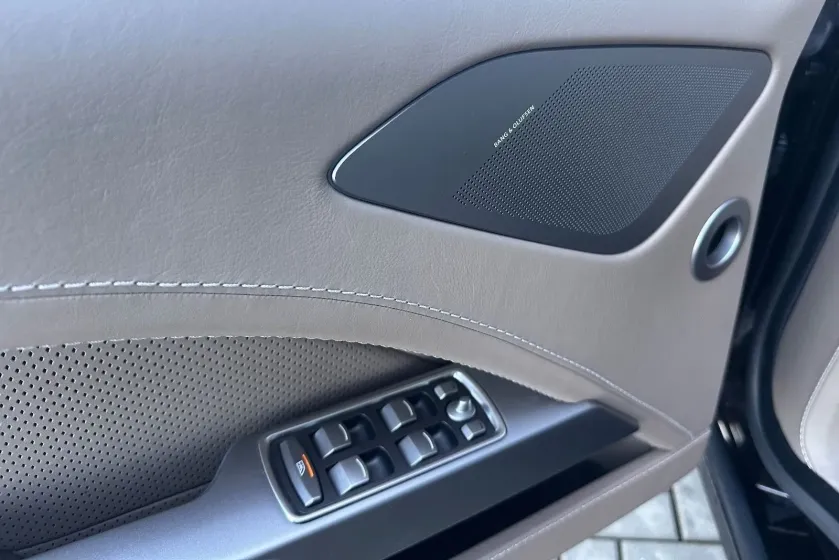
I twist the analog knob and crank up the chorus of the song playing right now. The speakers are struggling. They hum softly, and talking about the bass is pointless. At least there’s a faint substitute in the gently vibrating door panels. But this isn’t about sound quality. This is about the message, the words that stir something inside. Just like the car I’m transporting to an exhibition. On paper, by today’s standards, its specs are laughable. But what if we actually get behind the wheel?
“Muss ich denn sterben, um zu leben?
Out of the dark…!
Hörst du die Stimme, die dir sagt:
Into the light…!”
Falco. Dark Falco.
The ’90s icon rings in my ears and pulls memories out of me like an old drawer stuck somewhere between nostalgia and mild trauma. That’s just Falco. But it wouldn’t hit so hard if I weren’t sitting exactly where I am.
EVO.
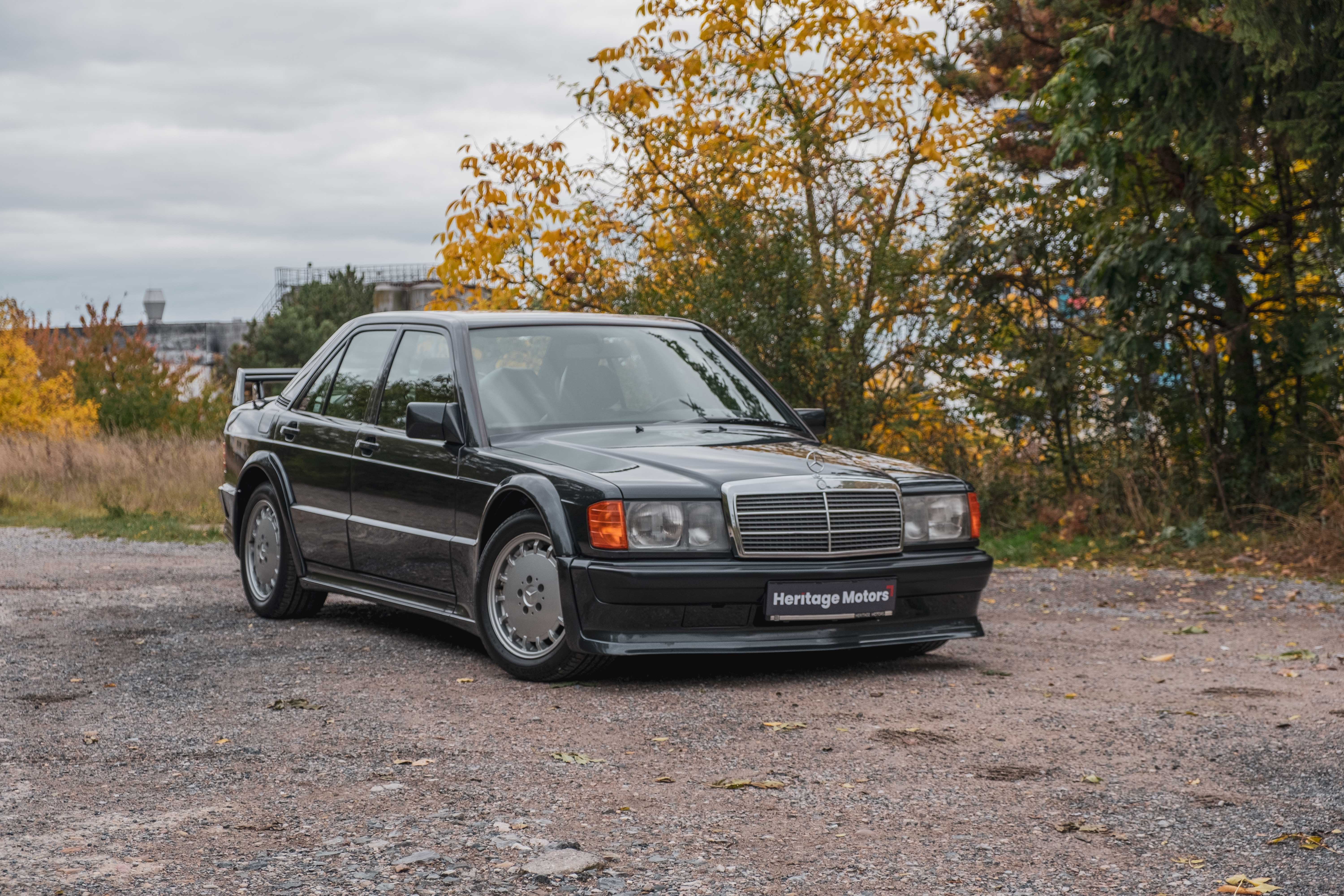
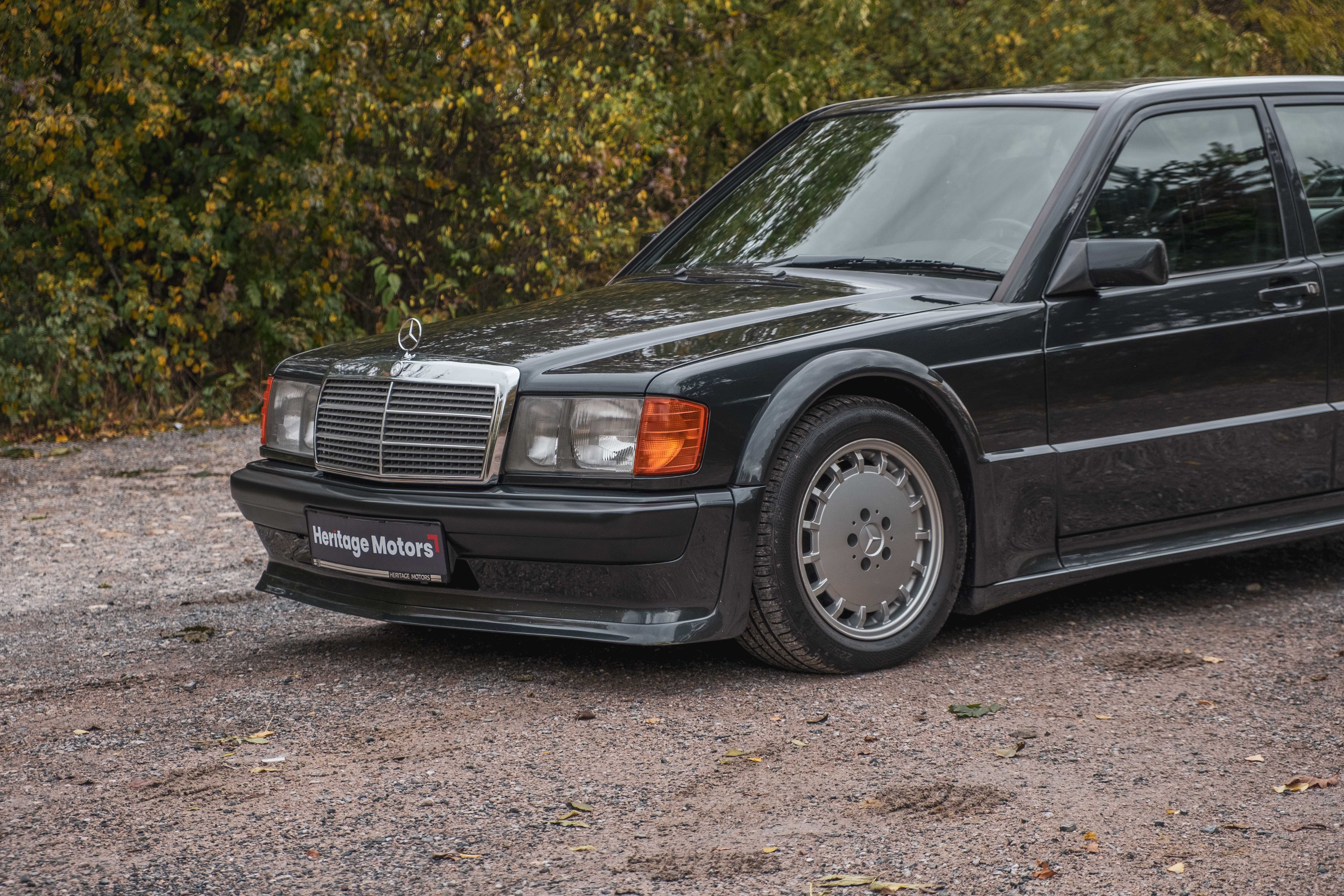
And I’m not talking about some wild Japanese sedan’s first generation. This is a refined Mercedes. A machine born with a single purpose: to meet the rules for DTM racing and give BMW and Audi reason to rethink their life choices.
“The Mercedes-Benz 190E 2.5-16V Evolution I, by full name, was a sedan produced in 502 units, two more than required to homologate a DTM racing car.”
This dry little paragraph popped up during a casual Google search. And that’s when it hit me: this isn’t just a car for a Sunday drive. This is a ticket to history. Literally a key that opened Mercedes’ doors to motorsport.
From the 1989 season onward, the rule was simple: want to race in DTM? Build at least 500 road cars. No excuses, no exceptions.
Homologation was ruthless. And because of it, cars were born that today feel like gasoline-scented investment gold: Ford Sierra RS Cosworth, Opel Kadett GSi, Audi 90 quattro… and among them, EVO. A little aristocracy among wild beasts.
Mercedes-Benz 2.5-16V EVO I – a ’90s icon
Prague is constantly jammed. Luckily.
Melancholy Falco keeps whispering in my head, and over it comes a deep baritone. Not from the speakers. From the exhaust. Properly, from the rear, with no filters or digital crutches. It’s not aggressive. More like a calm promise of violence.
I downshift before a sharp right-hander and let the car glide into the corner. The brakes have some miles on them and aren’t as sharp as today’s cars. Any modern “two-and-a-half-ton” machine would stop far better. But I don’t mind; here, I have to earn everything. Brake point, exit, power. That’s how it should be.
The car forgives little, and if I pushed it to the limit, I’d consider a seat covered in plastic. The more I admire the drivers who mastered this beast on country roads—or even on track days. And they weren’t just there for the numbers. 235 horsepower, nearly 1,250 kg, and a chassis almost identical to the DTM version could create a pace somewhere between “holy crap, that’s fast” and “tell mom I loved her” in the hands of a capable driver.
Some journalists at the time called the EVO the first super-sport sedan that felt like a race car. Sure, there’s a pinch of exaggeration. But just a pinch.
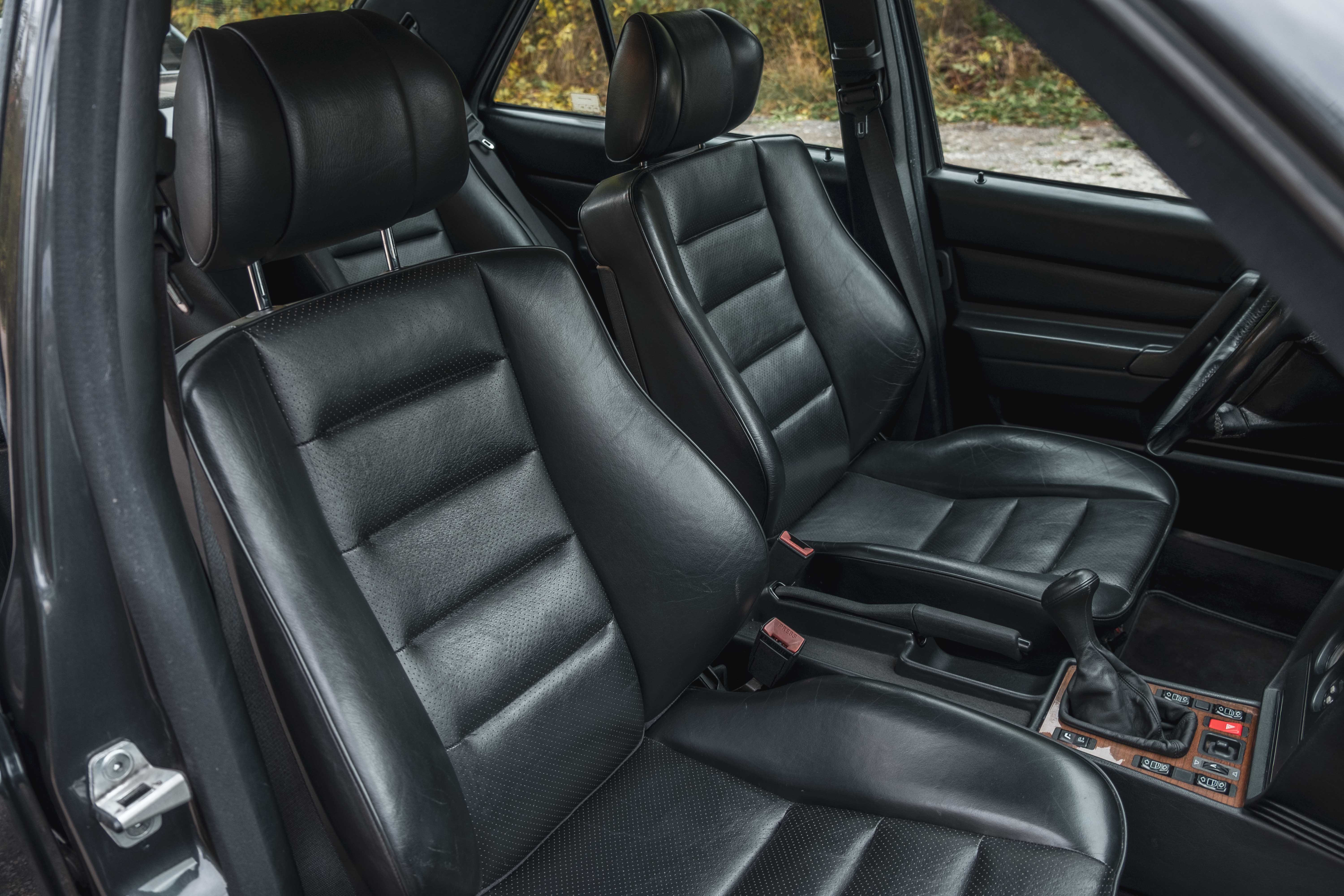
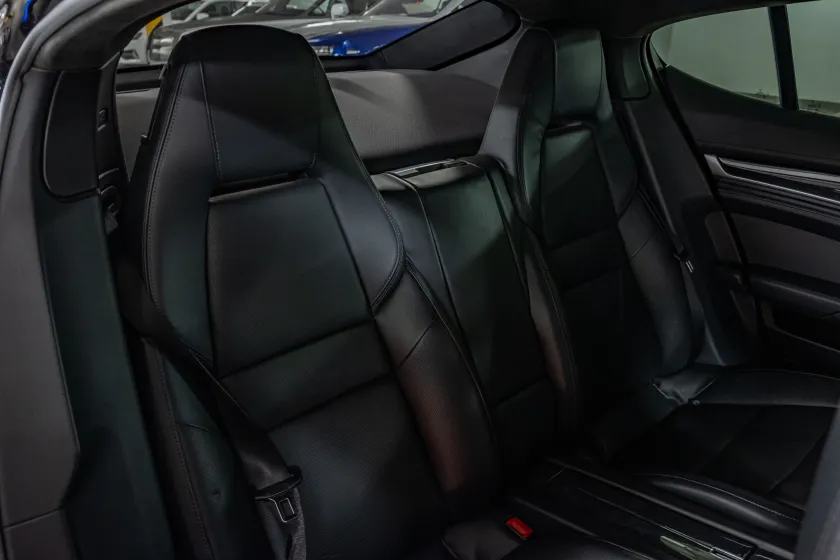
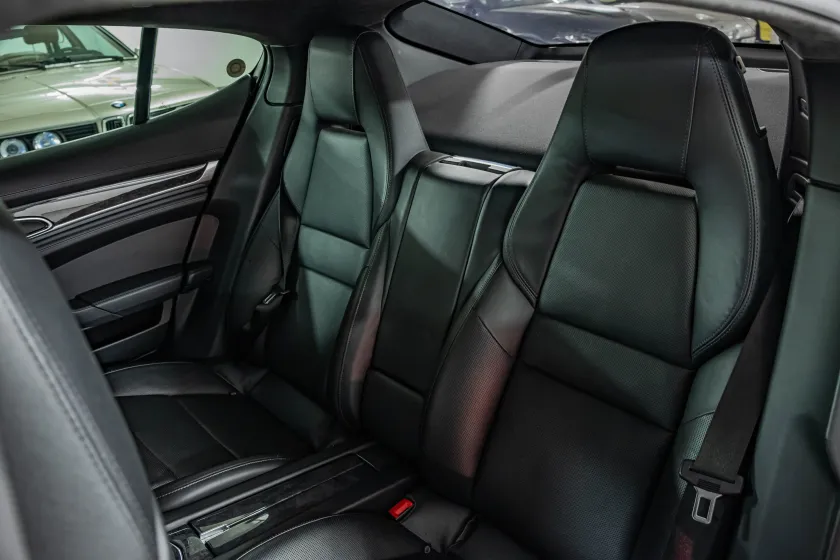
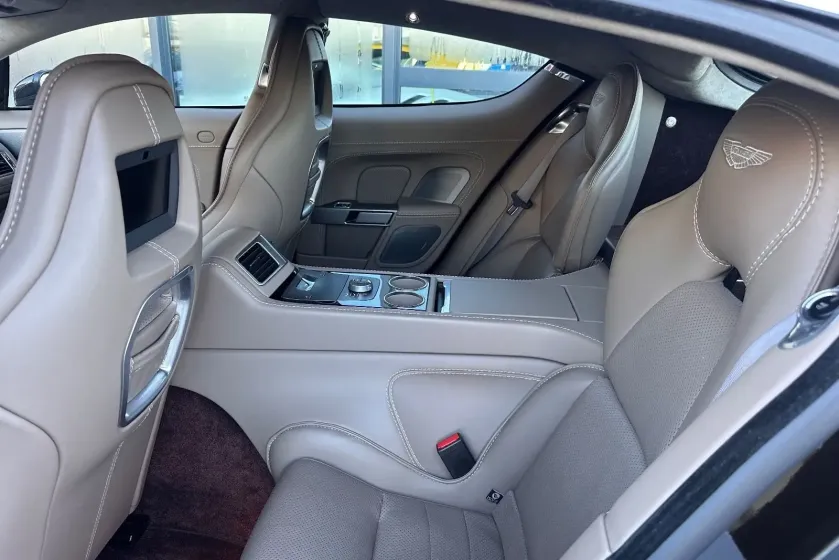
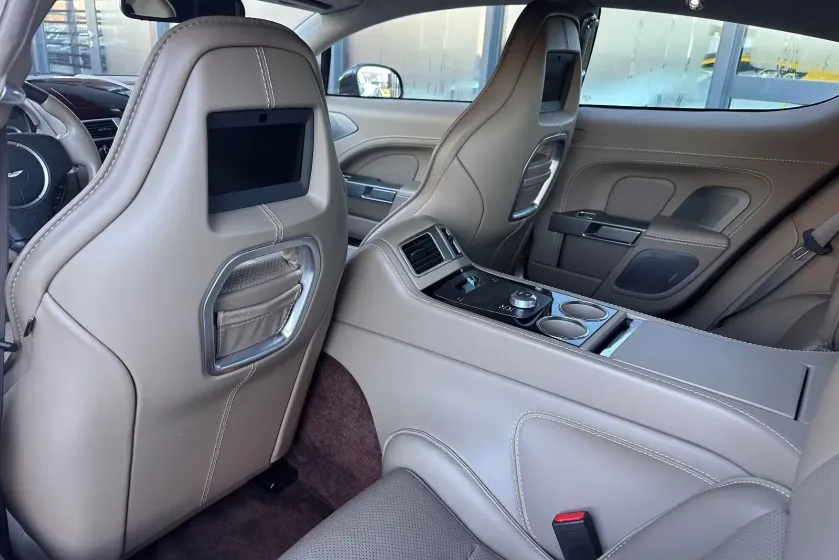
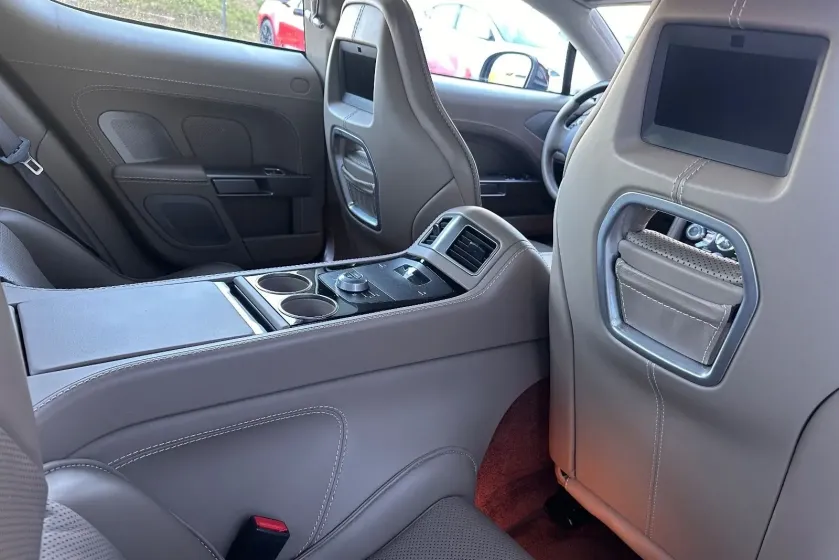
What really blew me away, though, was the interior. One more time—this is a ’90s car. A time when the Czech streets were ruled by the Skoda Favorit and the Tatra 613 looked like a mix of a government limousine and a sci-fi prop. Then comes the EVO, and without blinking, it throws out Recaro sport seats, electric windows, ABS, a sunroof, Bilstein shocks, and central locking.
The Germans weren’t playing chess with the others back then. They were three moves ahead and already brewing tea.
Recaro seats up front—and yes, in the back too
I hear voices. Again?
Anyway, the plan was simple: take the EVO out of the garage, photograph it, and bring it to the Legends - automobile festival event. About eight kilometres. No drama.
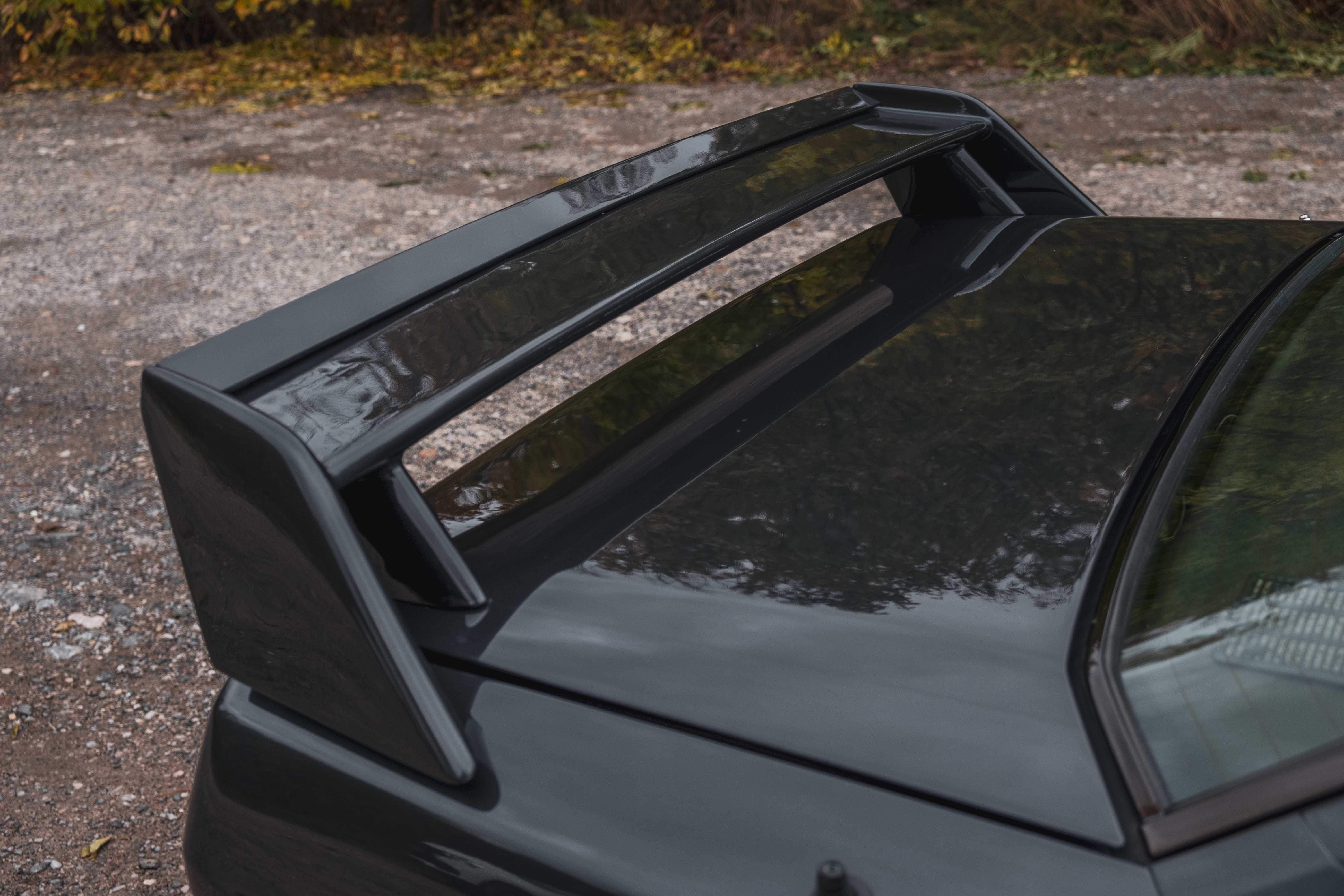
Then I stop at a traffic light. In the rearview mirror, a wing the size of a small dining table spreads behind me, and that familiar voice appears in my head:
“It’s warmed up. Give it a sip.”
“I won’t. It’s not mine.”
“Oh, come on.”
An internal dialogue that never ends well.
Under the pretext of giving this long-stationary car some TLC (yes, my favorite internal excuse), I miss the tunnel entrance and set off in search of an empty road. I don’t find one. Prague holds its victims tight.
Luckily.
Because after a few straights and brisk stretches, it hits me: the EVO is absurdly capable for our roads. And this is a 36-year-old car with “mere” 235 horsepower.
A proper twisty road would put a grin on my face wider than a tax return, but for that, the EVO and I would need to get acquainted first. Maybe even invite it to dinner. Otherwise, under normal circumstances… it’s basically a Mercedes. Just a bit tighter. Stiffer. Sharper. And communicative, like the neighbor returning from the Sunday market.
I don’t need to be Hans-Joachim Stuck to know something extraordinary was born back then.
Just set the table.
Mercedes by… Cosworth?
The classic question: “Is this the Mercedes with the Sierra engine?” At first, laughable. But on second thought… not entirely.
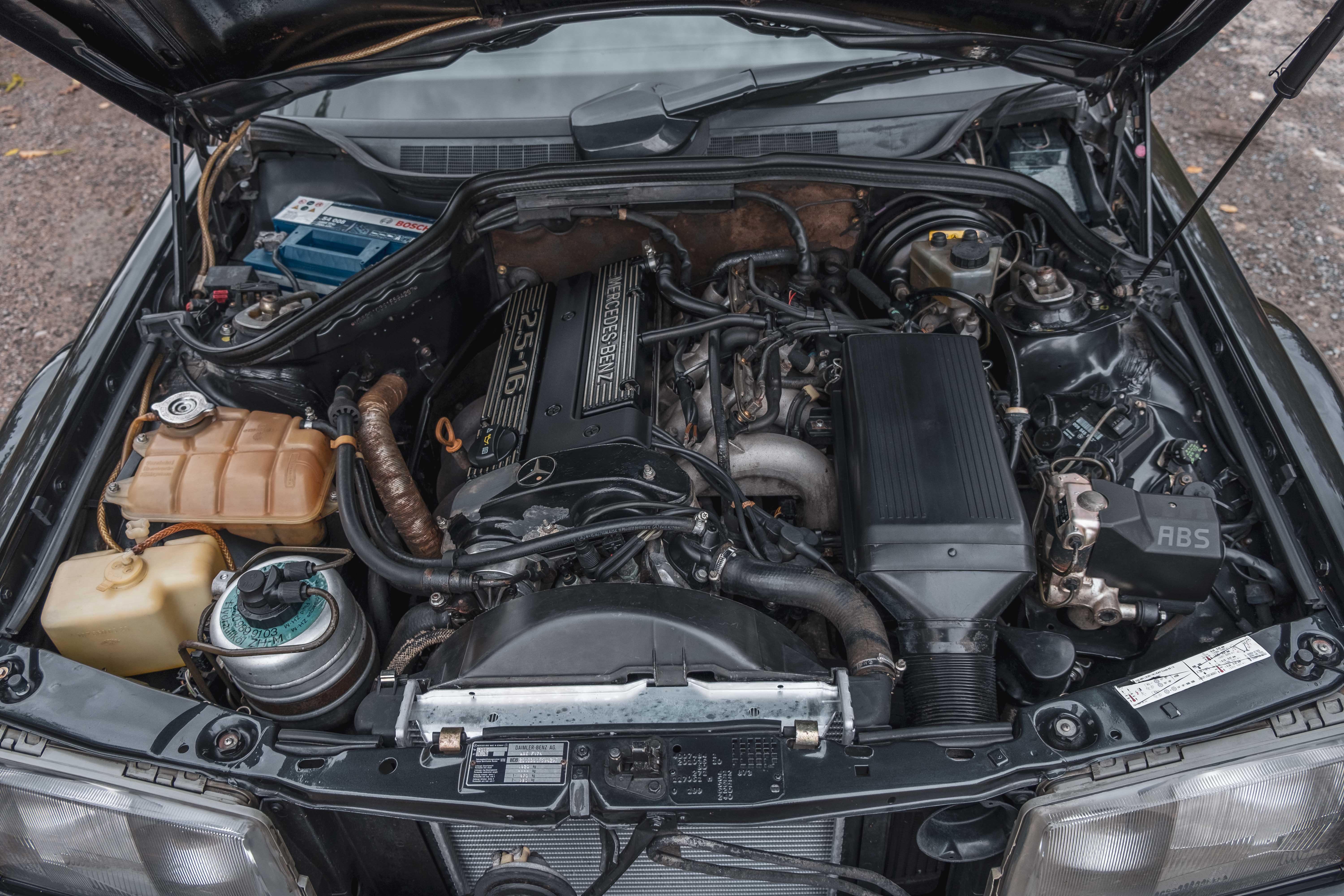
The EVO engine was tuned by Cosworth. Yes, the same Brits behind the crazy Sierras. Difference? Mercedes built most of the engine itself: the inline-four M102, 2.5 liters. Then came the gentlemen in 007-style suits (don’t all Brits look like that?), who “gently” reworked the head, cams, intake, exhaust… and suddenly, it was a tiny mechanical symphony.
Lesson? Remember the name Cosworth. They touched motorsport with the precision of a surgeon and results that others could only chase.
The engine will get care in the future, but even now, it still has plenty of power and spirit.
It was 1989…
November. Wenceslas Square in Prague bursting at the seams. Tension in the air. Change imminent.
Revolution.
While the regime was changing at home, a quieter rEVOlution was being born in motorsport: EVO I.
Perhaps paradoxically without major race victories. But immensely important. It set the direction. Prepared the ground. And above all, opened the doors for EVO II, which came, saw… and yes, this time conquered. Hopefully, I’ll get to it someday too.
Until then, back to scanning the classifieds. Maybe I’ll start humbly, with a plain 190. Graphics can slap on the Evolution badge, and a wing will surely be sold on Wish or Temu.
So, EVO instead of a Porsche?
The eternal question. Evolution is undoubtedly an unusual and rare machine, capable of holding its own against many contemporary rivals. The real problem is paradoxically the production limit: 500 units (oops, 502) isn’t many, and finding one with history, undamaged, and still marketable? Almost a miracle. And “miracles” in cars are usually priced accordingly.
Porsche is different. From that era, you can already grab a Porsche 911 Carrera 3.2, a Porsche 944 Turbo, or later a 968. Comparable cars? Not really. But their prices flirt with EVO I, and the market is far more ready for them. With Mercedes, finding a genuine seller at purchase or an enthusiastic connoisseur at resale is much trickier.
On the other hand, EVO is nowhere near as famous as Porsche. It’s a completely different kind of car from the first glance. Without the wing, it could easily pass as a sleeper, and such cars are truly special for enthusiasts. If you’ve got the money, go for it—but look for a truly quality (read: expensive) unit. No compromises.
If you just want to drive, wrestle with the car a bit, and breathe the ’90s, jump into a Lancia Delta Integrale or a well-kept Ford Sierra RS Cosworth… neither will disappoint, and both sit at roughly half the price of an EVO. Options abound.
And then there’s EVO II—but that’s another story.
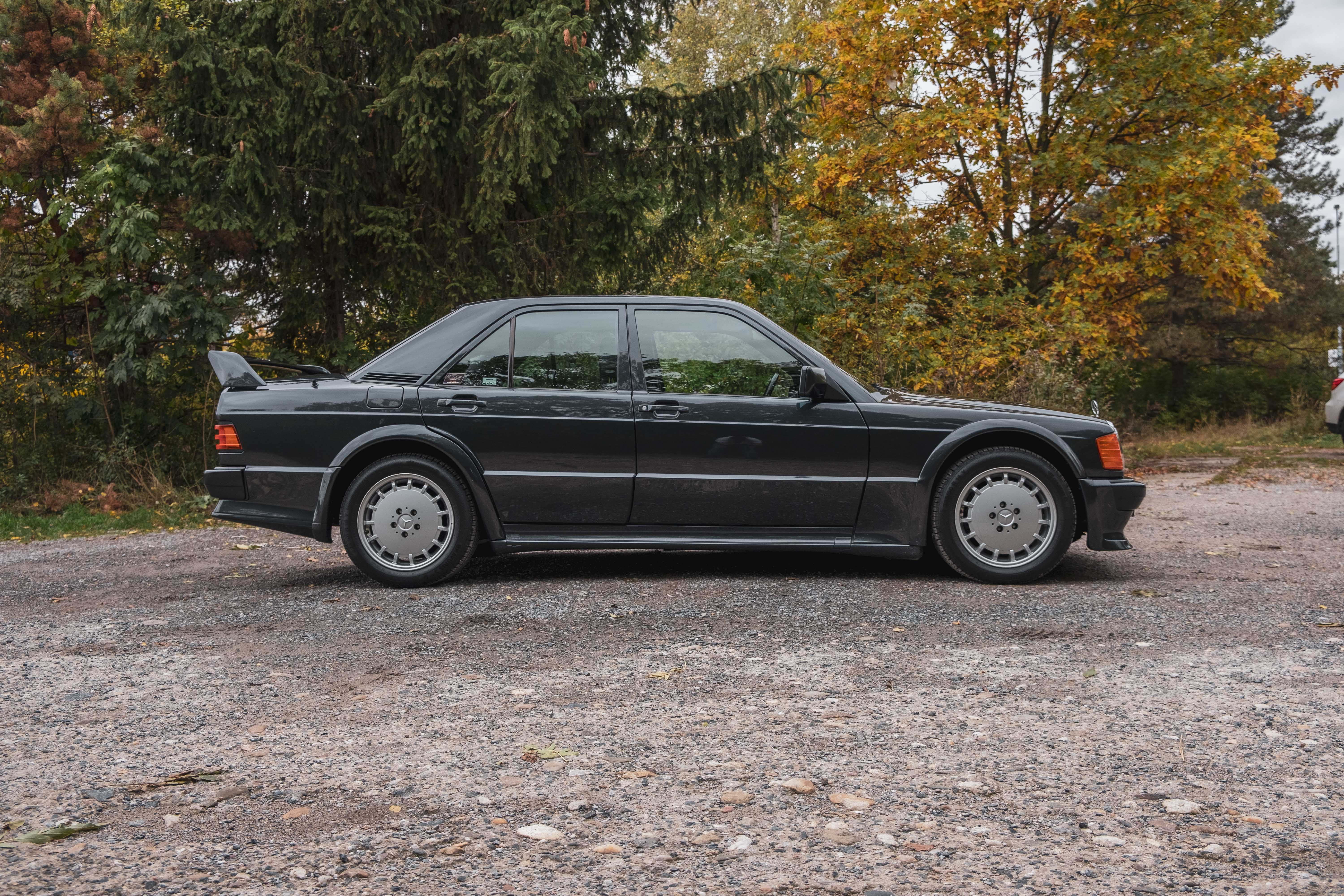
From the side, you almost can’t tell this is a semi-racing 190. Except for the wing…
PS: Falco is stuck on the radio. Can’t get him out. Original. Of course.
Never miss a story
Get the latest stories and exclusive insights from the world of remarkable and collectible cars